
Molecular biology
Using state-of-the-art molecular biological methods, METAS characterises nucleic acids in a wide variety of samples. This enables reliable analyses in the fields of diagnostics, food safety, environmental monitoring and biotechnology.
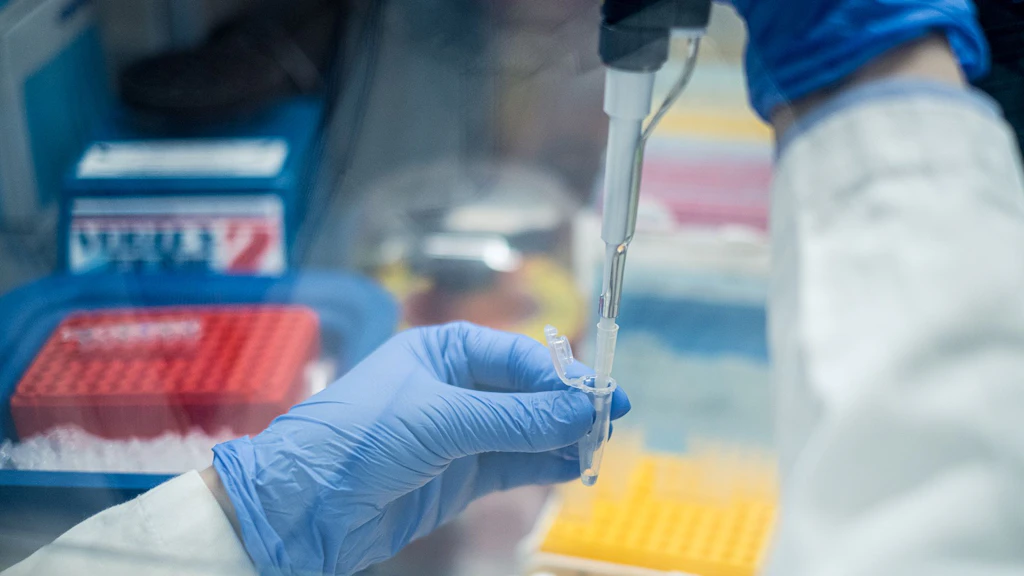
Molecular biology in everyday life
Nucleic acid analyses (DNA and RNA analyses) form the basis for detecting pathogens in food and monitoring germs in the environment. They thus contribute to the early detection of outbreaks and enable effective measures to be taken. In medicine, the reliable quantification of specific DNA and RNA sequences is used to diagnose infectious diseases or to detect tumours.
Typical applications of molecular biology
Nucleic acid detection is used in the following areas of application, among others:
- Screening food for human pathogenic viruses such as hepatitis and norovirus
- Determination of genetically modified organisms (GMOs), e.g. in maize, rice or soya products
- Identification of animal and plant species
- Detection of plant pests such as the bacterium Xylella fastidiosa
- Environmental monitoring of pathogens such as SARS-CoV-2 or influenza
- DNA sequencing for diagnostic applications, e.g. in the typing and early detection of cancer
Our services in the field of molecular biology
Our services include:
- the detection of viral, microbial and parasitic contamination in food and environmental samples
- the production of nucleic acid reference standards for various applications
- the comprehensive characterization of DNA and RNA materials using quantitative PCR (qPCR), digital PCR (dPCR) and next-generation sequencing (NGS)
We also support our clients in the development, establishment and validation of molecular biological methods as well as in the implementation of regulatory and quality-relevant requirements in the laboratory environment.
Is the service you are looking for not listed on the website? Please do not hesitate to contact us so that we can work together to find a customised solution to your problem.
Measuring methods and technologies
Our laboratories have state-of-the-art molecular biology measurement facilities, which can be combined according to the specific application and customer requirements. These include:
- Extraction methods for DNA and RNA from a wide variety of sample matrices
- Digital PCR (dPCR) and digital droplet PCR (ddPCR)
- Quantitative PCR (qPCR)
- Next-generation sequencing (NGS)
Our methods enable reliable quantitative and qualitative determination of DNA and RNA, even at extremely low concentrations.
Quality and expertise
The Biological Analysis and References Laboratory is accredited in accordance with ISO 17025:2017 (STS 0119):
You can find more information on the quality of our services on the “Integrated Management System” page.
Enquiry and contact
Laboratory for Biological Analysis and References
Federal Institute of Metrology METAS
Campus Liebefeld
Schwarzenburgstrasse 165
3003 Bern-Köniz
Index
More information

Reference Laboratory for Genetically Modified Organisms in Food
Genetically modified organisms (GMOs) require authorisation in Switzerland. The METAS National Reference Laboratory for Genetically Modified Organisms in Food ensures the use of uniform, validated analytical methods for the detection of GMOs.

National Reference Laboratory for Food-Borne Viruses
Contaminated food can contain pathogenic viruses that endanger health. As a National Reference Laboratory, METAS supports the reliable testing of food for such viruses and thus makes an important contribution to consumer protection.

Metrological reference materials and artefacts
Metrological reference materials and artefacts enable the calibration, validation and metrological traceability of measurements. Our selected reference materials thus ensure accurate, reliable and internationally comparable measurement results.