
Organic Analysis
We precisely measure organic molecules, mainly trace-level contaminants, in food, food contact materials, blood, and urine. This enables reliable (bio)monitoring of chemical exposure, supports food safety, public health, environmental protection, and research.
Organic Analysis in everyday life
Organic substances that can affect human health and the environment are imperceptible in everyday life. Many of them, such as bisphenols, phthalates, and per- and polyfluoroalkyl substances (PFASs), are used in many everyday products (food packaging, textiles, cosmetics, medicaments) and industrial applications. They may migrate directly into food and can be released into the environment, eventually finding their way into food chains, drinking water, and the human body. Some substances, such as polycyclic aromatic hydrocarbons, furans, or acrylamide, can be formed during food processing and cooking and others (toxins) are produced by living organisms (plants, micro-organisms), and are thus present in consumed food.
Our organic analyses make these contaminants detectable and quantifiable, even at trace levels. They enable us to track the contaminants in various sample types. In this way, organic analysis makes an important contribution to food safety, public health, and environmental protection.
Typical applications of organic analysis
Our organic analyses are used in a wide range of applications, including:
- Human biomonitoring to assess human exposure to organic contaminants (bisphenols, phthalates, and PFASs) through the analysis of biological samples such as urine and serum
- Food safety monitoring to determine the occurrence and levels of contaminants in food products and support exposure and risk assessment.
- Food contact material characterization to investigate the presence of contaminants (PFASs and bisphenols) and to assess their potential migration into food
- Industrial process control and/or quality assurance, to ensure product quality and/or the consistency of manufacturing processes
- Research and development projects to develop and implement novel methods that keep pace with evolving manufacturing processes and increasingly stringent regulatory requirements; so, to measure newly introduced substances (emerging contaminants; ex. bisphenol F), to detect lower concentrations (ex. PFASs in food), and to analyze new sample types (ex. PAHs and PFASs in industrial emissions).
Our services in the field of organic analysis
Analysis of organic contaminants
We carry out reliable analyses of organic contaminants with a focus on food and biological samples as well as produce matrix certified reference materials (CRMs) to deliver standards for method validation and quality assurance.
Our services are currently the following:
- Analysis of the four EU-regulated PFASs (PFOA, PFOS, PFNA, PFHxS) together with other PFASs in serums, milk-based food products, fruits and vegetables
- Analysis of bisphenol A and 10 other bisphenols in urines
- Analysis of 29 phthalate metabolites in urines
- Analysis of various process contaminants in food products (i.e., polycyclic aromatic hydrocarbons (PAHs), N-nitrosamines (NNAs), heterocyclic aromatic amines (HAAs), acrylamide, furans, monochloropropanediols (MCPDs), and glycidyl esters (GEs))
- Analysis of polycyclic aromatic hydrocarbons (PAHs) in soils, sediments, and particulate matter
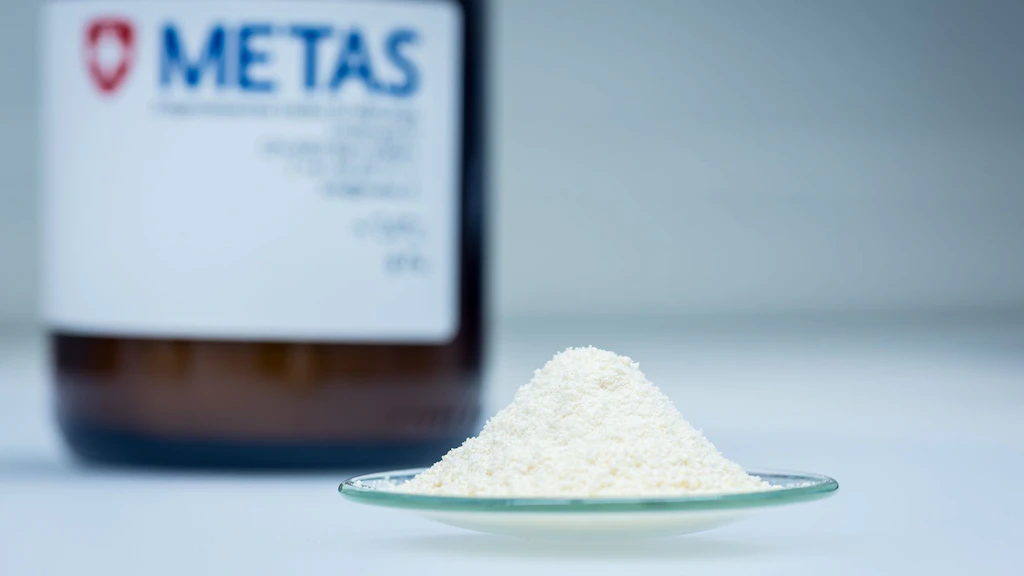
- Sale of CRM WP-CBR001: certified mass fractions of 4 PAHs (benz[a]anthracene, benzo[a]pyrene, benzo[b]fluoranthene, chrysene) and 4 trace elements (As, Pb, Cd and Hg) in whey protein powder. In Switzerland, it is available from METAS and abroad, it is available from Merck Purchase CRM WP-CBR001 at Merck
- National Reference Laboratory activities for process contaminants in food to ensure that that the analyses conducted by official control laboratories and private laboratories are comparable and traceable.
Our services are primarily provided to public authorities, laboratories, industry, and research institutions. Unfortunately, we are unable to offer analytical services to private individuals.
Measuring methods and technologies
Detecting organic contaminants at trace and ultra-trace levels requires not only highly sensitive instrumentation, but also robust analytical workflows capable of handling complex sample matrices.
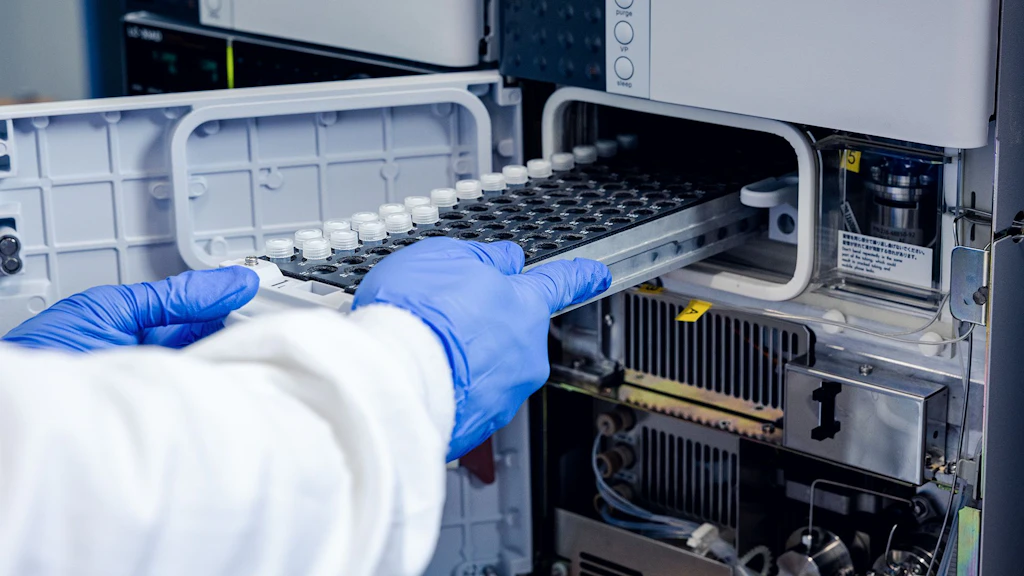
Our laboratory relies on state-of-the-art molecular mass spectrometry coupled to liquid or gas chromatography (LC-MS/MS or GC-MS/MS) for the identification and quantification of organic contaminants. Tailored sample preparation strategies, including QuEChERS, accelerated solvent extraction (ASE), and solid-phase extraction (SPE), enable the selective extraction, purification, and pre-concentration of target and suspect substances from challenging matrices such as food, biological samples, food contact materials, and environmental samples.
Through continuous method development and technological innovation, we ensure that our analytical capabilities keep pace with scientific progress and evolving regulatory and societal needs.
Quality and expertise
You can find information on the quality of our services on the “Integrated Management System” page.
Enquiry and contact
Laboratory Organic Analysis and References (OAR)
Federal Institute of Metrology METAS
Schwarzenburgstrasse 165
3097 Liebefeld
T +41 76 338 13 50
oar-laboratory@metas.ch
More information
Index
Metrological reference materials and artefacts
Metrological reference materials and artefacts enable the calibration, validation and metrological traceability of measurements. Our selected reference materials thus ensure accurate, reliable and internationally comparable measurement results.

Reference Laboratory for Process Contaminants in Foodstuffs
Process contaminants can arise during the processing of food and pose health risks. As the National Reference Laboratory for Process Contaminants in Foodstuffs, METAS provides technical support to the official food inspection authority (cantonal laboratories) and the central federal authority (Federal Food Safety and Veterinary Office).