
Reference Laboratory for Chemical Elements and Nitrogen Compounds in Foodstuffs
Chemical elements and nitrogen compounds can cause poisoning or cause disease. The Reference Laboratory for Chemical Elements and Nitrogen Compounds in Foodstuffs guarantees uniform analytical methods according to European standards.
Why are chemical elements and nitrogen compounds in food examined?
Chemical elements
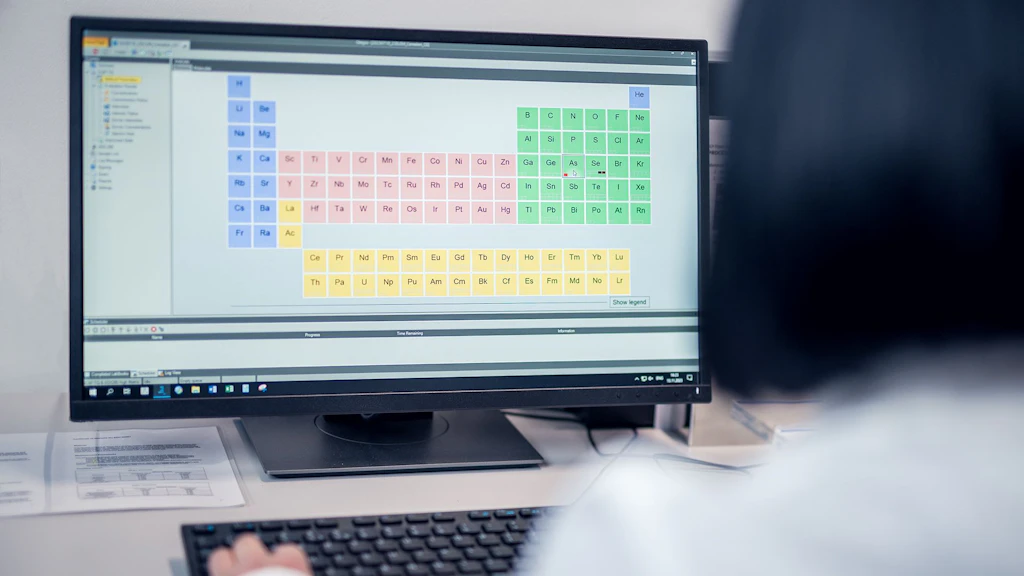
By chemical elements we primarily mean metals. Some are vital trace elements (e.g. iron, zinc or copper), while others can be toxic in the tiniest amounts (e.g. lead, cadmium or mercury).
Such toxic metals can unintentionally enter the food chain, for example through plants, animal feed and fish that absorb them from the environment, or during food processing, for example through unsuitable pottery.
Nitrogen compounds
Nitrate is one of the most common nitrogen compounds. It is a component of fertilisers or soils and is absorbed by plants via the roots. In principle, nitrate is relatively harmless to health. However, it can be converted into nitrite in foodstuffs or through digestion by enzymes. This nitrite, in turn, can form carcinogenic nitrosamines together with amines. Nitrites (E249-250) and nitrates (E251-252) are also used to preserve foodstuffs such as cured meat products and fish.
Limit values have been established for metals and nitrate and nitrite in food due to possible adverse effects on human health. In Switzerland, they are set out in the Contaminants Ordinance:
Reliable analyses of chemical elements and nitrogen compounds are essential for food safety. To ensure this, the Federal Food Safety and Veterinary Office (FSVO) has appointed METAS as the National Reference Laboratory (NRL) for Chemical Elements and Nitrogen Compounds in Foodstuffs.
Detection methods and analysis methods
In the National Reference Laboratory, we perform the analysis of chemical elements and nitrogen compounds in foodstuffs primarily by means of mass spectrometry with inductively coupled plasma (for elements) and ion chromatography (for nitrate and nitrite).
Our available reference materials can be found in the document below:
Quality
Accreditation
As a National Reference Laboratory, we are accredited in accordance with the European standard EN ISO/IEC 17025 “General requirements for the competence of testing and calibration laboratories” (accreditation number: STS 0119).
Validation of methods and suitability tests
In order to ensure that the quality of our analyses remains at the highest level, we are taking part in the validation of methods studies and in the suitability tests organised by the European Union Reference Laboratory.
If required, we also organise or arrange aptitude tests for the cantonal laboratories.
National and international cooperation
As the National Reference Laboratory, we represent Switzerland at meetings and in working groups organised by the European network. The aim of this collaboration is to:
- promote the exchange of knowledge
- forward the recommendations of the European Union Reference Laboratories to the national bodies
In order to pass on important findings and developments from the international meetings to Swiss circles of experts and to promote dialogue with the cantonal enforcement laboratories, we organise a national symposium every year.
NRL Symposium on the Analysis of Chemical Elements and Nitrogen Compounds
The next symposium of the National Reference Laboratory for Chemical Elements and Nitrogen Compounds in Foodstuffs will take place on 15 December 2026 at the Liebefeld Campus.
For further information on the symposium, please contact: nrl-mn@metas.ch.
More information

Inorganic analysis
With the help of inorganic analysis, we determine chemical elements and their form in a wide variety of samples – from food to soil and blood. We also investigate nanoparticles and determine PFAS indicators. In this way, we provide reliable measurement data for the monitoring of food, environmental samples and biomaterials for health and environmental protection.
Index
Contact
Federal Institute of Metrology METAS
Campus Liebefeld
Schwarzenburgstrasse 165
3003 Bern-Köniz