
Inorganic analysis
With the help of inorganic analysis, we determine chemical elements and their form in a wide variety of samples – from food to soil and blood. We also investigate nanoparticles and determine PFAS indicators. In this way, we provide reliable measurement data for the monitoring of food, environmental samples and biomaterials for health and environmental protection.
Inorganic analytics in everyday life
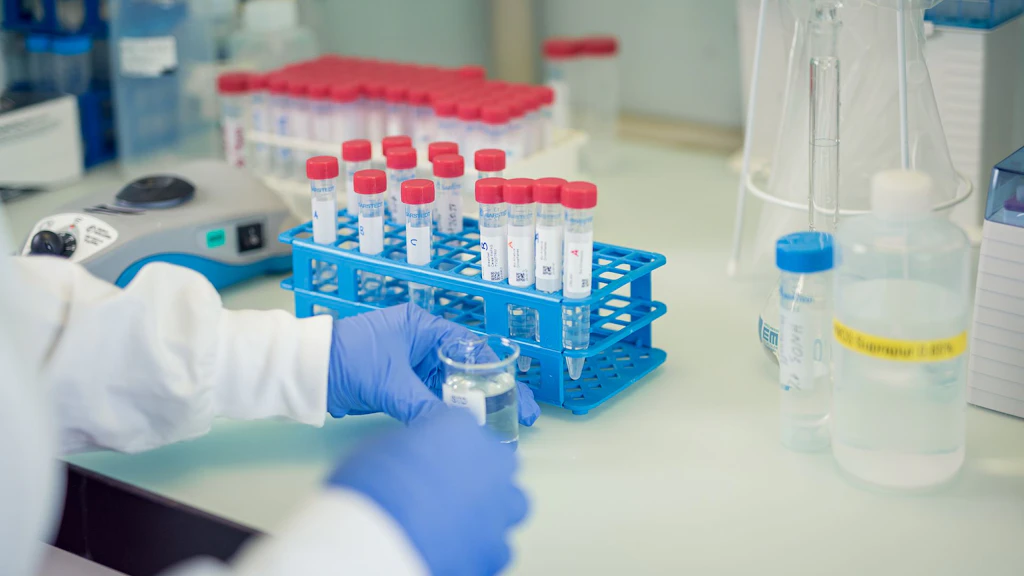
Many substances that influence health and the environment are not consciously perceivable – whether toxic metals in food, PFAS and potentially harmful nanoparticles in soil and water, or essential trace elements in blood and urine. Some elements are essential for life, while others can be toxic even in tiny amounts. The toxicity of a rice sample, for example, is determined by how much arsenic it contains and in what chemical form.
Inorganic analysis makes the contents of such substances visible, comparable and traceable: from checking legal limit values in food and nutritional data to assessing the environmental impact of pollutants such as nanoparticles. In this way, accurate measurements help to identify risks and take effective measures.
Typical applications of inorganic analysis
Inorganic analysis is used in various areas, such as:
- in epidemiological surveys to quantify elements in human samples (human biomonitoring), such as in blood, serum and urine
- in the speciation of elements in food to distinguish different chemical forms and to assess their different toxic effects
- for the Swiss Food Composition Database for determining elemental content of food such as vegetables, fruit or rice products
- in environmental analysis and the circular economy to determine elemental contents in soil, water, sediments and sewage sludge ash
- for food contact materials and industrial emissions to estimate the total exposure to PFAS (so-called forever chemicals)
- in the characterisation of nanoparticles in environmental and food samples, e.g. titanium dioxide in food or mercury nanoparticles in soil and water
Our services in the field of inorganic analysis
We perform traceable analyses of elements and their chemical forms in a variety of samples. In addition, we determine the fluorine content as an indicator of the total PFAS content and characterise nanoparticles. Our focus is on food monitoring, environmental analysis, human biomonitoring and quality assurance in laboratories.
In addtion, on behalf of the Federal Food Safety and Veterinary Office (FSVO), we fulfil the role of the National Reference Laboratory for Chemical Elements and Nitrogen Compounds in Foodstuffs.
Elemental and speciation analyses
Our analyses include the quantification of:
- toxic elements such as lead (Pb), cadmium (Cd), arsenic (As), nickel (Ni) and mercury (Hg) as well as other macro, micro and trace elements in food
- Arsenic species for the assessment of toxic forms
- Elements in blood, serum and urine
- Elements in soils, sediments, water, sewage sludge ash and industrial emissions
Analyses of nitrogen compounds
We quantify nitrate and nitrite in food.
Determination of nanoparticles and PFAS indicators
For special questions, we offer the following services:
- Characterisation of nanoparticles, e.g. titanium dioxide in food or nanoparticles in environmental samples
- Determination of total fluorine as an indicator of total PFAS exposure in a variety of samples such as food contact materials and industrial emissions.
Certified reference materials (for laboratories)
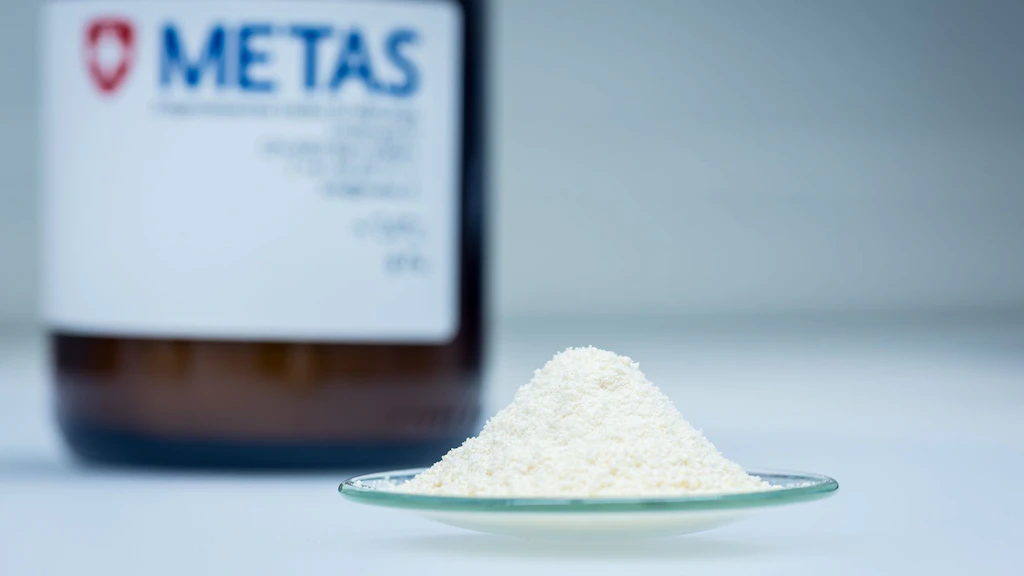
We produce certified reference materials and thus deliver standards for calibration, method validation and quality assurance in laboratories. The certified reference material WP-CBR001 (whey protein) contains, among other things, certified mass fractions of arsenic, lead, cadmium and mercury.
In Switzerland, this can be obtained directly from METAS; abroad, it can be obtained via Merck Life Science.
A reference material from sewage sludge ash is under development.
Is the service you are looking for not listed on the website? Please do not hesitate to contact us so that we can work together to find a customised solution to your problem.
Measuring methods and technologies
Depending on the application, we combine different methods for our analyses – from sample preparation to detection. These include, but are not limited to:
- highly sensitive element analysis with ICP-MS and ICP-OES
- chromatographic speciation with HPLC-ICP-MS and IC-ICP-MS to determine individual chemical forms of elements
- Combustion ion chromatography (CIC) to capture total fluorine as an indicator of PFAS
- Nanoparticle characterisation with single-particle ICP-MS (sp-ICP-MS), size separation ICP-MS (SEC-ICP-MS) and dynamic light scattering (DLS)
- complementary techniques such as TXRF and direct mercury analysis (DMA) as well as infrastructure for biological samples and the detection of trace quantities
Elements, chemical species, nanoparticles and PFAS indicators can be determined with high precision even in complex samples.
Quality and expertise
You can find information on the quality of our services on the “Integrated Management System” page.
Enquiry and contact
Inorganic Analysis and References Laboratory
Federal Institute of Metrology METAS
Campus Liebefeld
Schwarzenburgstrasse 165
3003 Bern-Köniz
T +41 58 387 03 71
references@metas.ch
FAQ
More information
Index

Reference Laboratory for Chemical Elements and Nitrogen Compounds in Foodstuffs
Chemical elements and nitrogen compounds can cause poisoning or cause disease. The Reference Laboratory for Chemical Elements and Nitrogen Compounds in Foodstuffs guarantees uniform analytical methods according to European standards.
Metrological reference materials and artefacts
Metrological reference materials and artefacts enable the calibration, validation and metrological traceability of measurements. Our selected reference materials thus ensure accurate, reliable and internationally comparable measurement results.