
Biological analyses
Using our analyses, we determine biomarkers in complex samples using accredited and traceable methods. For new analytes, we develop detection methods tailored to your individual requirements.
Our services
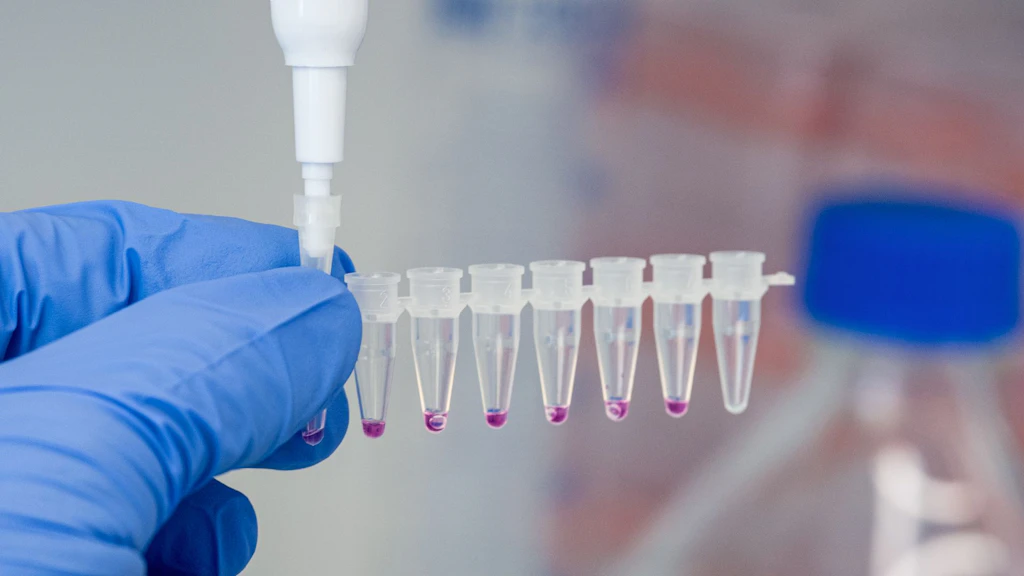
We develop tailored detection methods and perform molecular biological analyses of your sample or product in our ISO/IEC 17025-accredited laboratories. We reliably determine nucleic acid sequences, concentrations and qualitative properties – even near the detection limit, SI-traceable and internationally recognised. Our services in the field of biological analysis include:
- Nucleic acid analysis using qPCR and dPCR
- Detection of viral, microbial and parasitic impurities in food and environmental samples
- Detection of genetically modified organisms (GMOs)
- Biological species identification
- Characterisation of standards and control materials
- Next-generation sequencing (NGS)
- Analysis of cancer biomarkers
- Metagenomic examinations
- Development and validation of reference methods
- Consulting and training in the field of nucleic acid metrology
Who we work for
- Industrial customers from biotech and diagnostics
- Authorities such as the FOPH, FSVO, FOCBS and cantonal laboratories
- Universities and research institutions
- Device manufacturers and users
More information

Molecular biology
Using state-of-the-art molecular biological methods, METAS characterises nucleic acids in a wide variety of samples. This enables reliable analyses in the fields of diagnostics, food safety, environmental monitoring and biotechnology.