
Mass: Weight measurement
From food sales to medicine dosages and quality control in industry – accurate weight measurements generate confidence. We ensure SI traceability by calibrating weights.
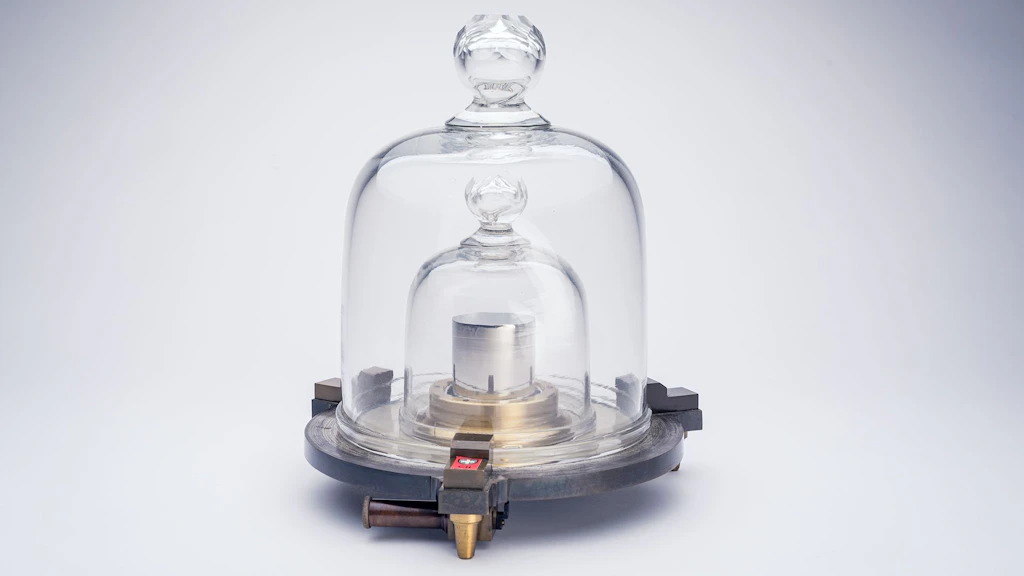
Measuring weight in daily life
The mass of an object is often referred to colloquially as its weight and should not be confused with its weight force. In everyday life, we perceive the mass of an object primarily through gravity. The larger the mass, the greater the force of gravity that acts on the object and the greater its weight seems.
We encounter weight measurements every day: in shopping, in food production, in medicine, and when using our own bathroom scales. Scales are the instruments most commonly used to determine mass precisely. But in order for scales to deliver reliable and trustworthy measurements, they must be verified regularly. This verification is usually carried out on site with calibrated weights.
Typical use cases for weight measurement
Weight measurements are taken in a wide variety of areas:
- Shops and retail outlets: when weighing vegetables, fruit, cheese or meat
- Agriculture: when weighing grain after harvest
- Waste disposal: when determining the price by weight
- Medicine and sport: to determine body weight
- Airports: when weighing luggage
Our services in the field of mass
Weight calibration
METAS offers weight calibration for industry, testing laboratories and verification authorities.
We determine the mass and volume of weights according to OIML recommendation R111:2004.
Mass
We determine the mass of the following weights:
- Class E1 and E2 weights from 1 mg to 50 kg
- Class F1 to M3 weights from 1 mg to 10 000 kg
Volume
For weights from 1 g to 10 kg, we determine the volume through hydrostatic weighing in water or by double weighing in different air densities.
Is the service you are looking for not listed on the website? Please do not hesitate to contact us so that we can work together to find a customised solution to your problem.
Measuring methods and technologies
We use high-precision mass comparators and precision scales to calibrate weights. The weights being tested are compared with reference weights whose accuracy is based on the national standards.
To achieve the highest possible measurement accuracy, we also take into account the influences of the environment on the measurement result. We determine:
- the volume or density of the weights through hydrostatic weighing or double weighing
- air density based on temperature, air pressure and relative humidity
For particularly high accuracy requirements, we also determine the centre of gravity of the weights.
All calibrations are traceable to the national standards and so to the SI units.
Quality and expertise
You can find information on the quality of our services on the “Integrated Management System” page.
Enquiry and contact
Laboratory Mass, Force, Pressure and Vibration
Federal Institute of Metrology METAS
Lindenweg 50
3003 Bern-Wabern
T +41 58 387 01 11
mass@metas.ch
More information
Index
Calibration
Our calibrations are based on nationally and internationally traceable references and guarantee the highest measurement accuracy and traceability to the International System of Units (SI) for measuring instruments from industry, research and administration.
Force and weighing instruments: Force measurement
Accurate measurement of forces is an important prerequisite for safe and reliable products. METAS uses newtons as its unit of measurement and ensures comparable measurement results.
Messung von Druck und Vakuum
Druck und Vakuum bestimmen die Sicherheit, Qualität und Leistungsfähigkeit vieler technischer Anwendungen. Das METAS schafft mit hochgenauen Referenzmessungen die Grundlage für zuverlässige, rückführbare und international vergleichbare Druckmessungen.